Showing posts with label genre fiction. Show all posts

11 January 2017

Plotting vs Pantsing Smackdown


There are two modes of story writing that I've come across. The one that sells, and the one that tells. The first one I think needs structure or else most readers won't get it, they won't stay engaged. I consider myself in the group of most readers. Most readers want to immerse in the story world and feel that arc upon which the protagonist journeys. We all understand that.

I read over at The KillZoneBlog where they discuss an article in Writer's Digest, "Just Write". The article indicates that by our own experiences we have a natural ability to write stories.  And so comes the argument of what method of story writing makes for great content, plotting or pantsing, for what the industry deems sellable.

Today, I'm going to be an advocate for the Pantser. Most folks who want to write have a passion to write. Not to tell a story, but to write, in any form. The story is just the most common and accessible means to doing just that. Writing is what we love to do. But, as mentioned at The KillZoneBlog, you don't just write a story, especially fiction. You must first understand the underlying mechanics of what makes stories work *cough* said the author of a story structure book to the novice writer. If you believe that, you haven't judged many writing contests. The talent pool is swimming with creative young writers who can tell great stories. Their imaginations are phenomenal.


What I like to argue, is for a great work of art to come to fruition, the writer must unleash the story within. That is, the telling of the truth. No form or structure is going to allow for the next great novel to come alive with as much impact. Story structure is what makes the reader get that familiar feel of a story. The beginning/middle/end, a call to journey, the  crisis, the denouement, whatever. It's what sells as a good read. Anyone wanting to write for a living must know this, learn it and apply it. Or you can fall back on the no-resolution resolution structure.

But a story that tells is different for me. The telling of a great story, even in fiction, is one that spills truth. It's one I deem a creation that forms from the implanted seed which grew inside the artist. The only way to spill truth for a writer with a story, is to be unbound from traditional forms of storytelling. How did S.E. Hinton, at such a young age, bang out The Outsiders? Or how did Mary Shelley pen Frankenstein? Do you think she was aware of story structure, or do you think she just wrote what was already within her? I think the latter. She'd endured the birth and death of her baby before she was 18 years old. The story was in her. It wasn't birthed from a formulaic presupposed rendition of the cookie cutter storyline. Though I'm sure publishers polished it up a bit after she wrote it.


Be careful not to provoke the artist into changing their vision. They shouldn't strive to fit a structure before they begin to write. Some guidance is great, but the gifted writer should write without scrutiny or the presupposition that they are incapable of producing greatness without guidance or structure. What came first? The story or the structure? No story should be bound by traditional and formulaic structures before writing it. The Writers Dream Kit contains over 32,000 story forms. I wonder how we discovered those forms. Were they written first?


Smiley faceIf you enjoyed this article and would like to receive future articles in your inbox --- Subscribe to our free newsletter

02 May 2016

The Thing That Turned Me - An Anthology

I'm so grateful to be part of this group of talented authors. Thank you to Randi Lee at Stay Classy Publications, for all that you've done to make this anthology possible. Thanks to all the contributors who have shared their stories, and many thanks to the folks who participated in compiling the promotion materials for this book.


“The Thing That Turned Me” will be available for paperback and ebook purchase on June 30, 2016.


We make decisions every day that will affect us for the rest of our lives: to stay or to go; to rise to the challenge or to crumble under its weight; to take the chance or let opportunity pass us by, without knowing what might have been. An open door. A chance encounter. A moment of truth. All such small things that can decide the rest of our lives without our even realizing it.


This variegated collection of authors of varying genres bring you pictures of these chances…these things that turn us—for better or for worse—and change our lives forever.


Will you recognize your moment when it comes?


Contributor Contribution
Imani Allen “Rehema”
Michelle Athy “The Disappearance of Miss Mary Dawkins”
Madalyn Beck “Hard to Love”
Diane Carlisle “The Window”
Alex J. Cavanaugh “CassaDawn”
Crystal Collier “The Shadow King’s Pet”
Cathrina Constantine “Rising Star~Falling Heart”
Michael Di Gesu “Through Shades of Gray”
Tonja Drecker “A Glowworm”
Deanie Humphrys-Dunne “The Journey”
Sherry Ellis “Finding My Voice”
Elise Fallson “Deadly Encounters”
Heather M. Gardner “Before We Break”
Samantha Redstreake Geary “Don’t be Koi”
Misha Gerrick “Ryan”
Krystal Hillsman “To the Last Love of My Life”
Celeste Holloway “Shadows Falling on Rainbows”
Harper L. Jameson “The Blanket”
Randi Lee “Off the Horse”
Terrance Dwayne Mack “When I Went Crazy”
K.D. Martin “Invariant”
Tyrean Martinson “Letting Go: A Siren Song”
Melissa Maygrove “Malice”
Nana Prah “Finding the Light”
Christine Rains “George and the Dragon”
Melanie Schulz “The Reader”
Elizabeth Seckman “Shifting Sands”
Tara Tyler “The Day Dave Broke the Internet”
Jenny Vyas Artwork for “Don’t be Koi”
Michelle Wallace “Shades of Deception”
L. Diane Wolfe “Revelation”
Roland Yeomans “Wednesday’s Child”   


Smiley faceIf you enjoyed this article and would like to receive future articles in your inbox --- Subscribe to our free newsletter

10 August 2015

The Day I Started Writing

by Stephanie Faris

It all started with an anthology. I was working as director of public relations for the Tennessee Arts Commission at the time and my assignment was to promote this new book of short stories by Tennessee writers. As I read the book, I started feeling the need to write a story of my own. Something deep involving sweet tea and front porches.

Instead I wrote a short story called The Gymnasium Memorial. It was about a bunch of teens mourning the death of a fellow student. It was published in one of those scam publications that pays you in free copies if you “win” a fake contest. But the bug had already bitten. I wanted to write a book.

My first inclination was to write young adult. I’d spent my teen years reading YA books and they still weighed heavily on my mind. I wrote three books before I learned that there was no market for YA at the time—unless you wanted to be paid $1,000 to ghostwrite a Sweet Valley High or Nancy Drew book. I began searching for something that had that same youthful spirit but actually occupied space on bookshelves.

The answer was in category romance. Those books, which at the time were published under two major names (Harlequin and Silhouette), were extremely popular. Harlequin had a new romantic comedy line called Love and Laughter, while Silhouette had a fun line called Yours Truly. I knew then that romantic comedy was my niche.

I spent years trying to get published—I even got “close” a few times. I learned “close” doesn’t mean a thing in publishing. Meanwhile, chick lit came and went and in its wake, romantic comedy was no longer welcome in traditional publishing. But the good news was, children’s literature exploded…opening publishers up to the very types of books that I’d always wanted to write.

My writing journey is an example of the winding path many writers take on the way to publication. Everyone’s experience is different, but one thing is certain: all of us are doing exactly what we want to do. Whether we’re publishing our third book or writing “the end” on the first novel we’ve ever written, it’s important to celebrate every second of it. There’s nothing better.

And the Cover Reveal of Stephanie's new book out in 2016


About the Author:

Stephanie Faris knew she wanted to be an author from a very young age. In fact, her mother often told her to stop reading so much and go outside and play with the other kids. After graduating from Middle Tennessee State University with a Bachelor of Science in broadcast journalism, she somehow found herself working in information technology. But she never stopped writing.

Stephanie is the Simon & Schuster author of 30 Days of No Gossip and 25 Roses, as well as the upcoming Piper Morgan series. When she isn’t crafting fiction, she writes for a variety of online websites on the topics of business, technology, and her favorite subject of all—fashion. She lives in Nashville with her husband, a sales executive.


Smiley faceIf you enjoyed this article and would like to receive future articles in your inbox --- Subscribe to our free newsletter

03 September 2014

A Funny New Author for Me

We have a local Goodwill bookstore not far from where I live and we made a detour there rather than drive 15 miles to Barnes & Noble. Why would I do that if I'm to support my fellow writers? I should be purchasing new books, not used ones which don't count as copies sold, right?

Well, I've decided I'm going to switch up my reading library. I'm giving up on the horror/suspense/thriller genres for now. Sorry, Stephen! This is big for me. It's a change I'd never thought would happen. I absolutely love King and Koontz and would never dream of searching for a "new" author. It's not like I'm looking to replace them altogether. As soon as one of them puts out another "gotta have it" novel, I'll be right back in there.

I wasn't in the bookstore for long before I found an interesting book cover. Some author by the name of Marian Keyes had produced a lovely pink ensemble, "Rachel's Holiday". The cover depicts a tall and thin cartoon figure of a whimsical girl celebrating with a bottle of wine. This looked fun and the following blurb had me sold:

"Hilarious...A coming-of-age journey of love and self-discovery...propelled by its unforgettable heroine." --Boston Globe
I'm only into chapter 3 and I'm hooked. Though the main character is apparently a substance abuser, the first person POV is very convincing and hilarious. I'd never experienced this sort of read before, but I think I've found a new kind of author, and I'm going to enjoy this tremendously.

If you've found yourself reading the same books over and over again, maybe it's time to take a chance on discovering a new author. Going the used bookstore route will help get you excited about it without taking a chunk out of your wallet. My book cost me $2.99 for the paperback (no shipping and handling) and now, I'll probably go online and purchase all of her other books!

Get excited about reading again. Go to your local Goodwill bookstore or book exchange outlet. Put some fun back into your reading. Take a risk on a new author or genre. I'm super excited!


Smiley faceIf you enjoyed this article and would like to receive future articles in your inbox --- Subscribe to our free newsletter

29 June 2014

Top 10 Character Flaws That Don't Work For Me

I read once (or maybe more than once, but who's counting?) that characters are more likable when they are flawed, and to some extent, I believe this to be true. I have my favorite characters who are all flawed in many ways, but there are those characters who are beginning to pick at that last nerve. They're so cliched and I wonder why they are chosen over and over again as the favored protagonist or one of the main characters. I don't like them any more because I see them everywhere!


The Millionaire Philanderer

I don't understand this. Why is it that the guys who have money must be portrayed as weak when it comes to women in pursuit? Stop letting these women drape on you like a cheap suit! Sling them to the side and show some self-respect. This is similarly done with the rock stars toting around their posse and loyal groupie bangers. And why are they always extremely handsome? Ever see Donald Trump or Hugh Hefner? For real...


The Deep Dark Secret Sufferer

A great way to expose a flaw for a character who has a secret is for them to perform some odd behaviors like visit a secret grave on the 3rd of each month, or something equally odd. Stop giving them permission to be emotionally erratic toward others with no explanation whatsoever only to have character A tell character B, "Oh, his mother died in a freak accident back in 2010 and he's never really recovered from it. A year later his sister was ate up by some flesh-eating bacteria she got at summer camp."

Of course, this sort of thing might work in a comedic rendition of some reality shows I watch for pure entertainment.


The Damsel In Distress

I'm tired of distress getting rewarded just because it is the more attractive option to the male ego. What about the woman who refuses to be rescued and this causes a man to leave her side and ultimately results in his saving a bus load of children?

Yea, women understand sacrifice, too. We know other shit is going on out there other than ourselves. Some of us can save ourselves. We can also help save others as well. Go save yourself a puppy or something! Readers will LOVE you. I promise.


The Chip on the Shoulder

This dude needs to get out of his own way. Nobody likes this anymore! The bad guys are losing steam because there are too many of them. You know, the opposite of this flaw is the shy guy. I  love me a shy guy, too. Please let's do away with the wise-cracking assholes and invite the John Nash's into our stories, because you can't have enough of A Beautiful Mind.


The Jealous Woman

Jealousy has always been an ugly thing to me, especially in a woman. If you're going to make your character a jealous one, at least give them some redeeming quality like having them internalize it rather than going all out ninja on a bitch. I guess what I'm saying is that jealousy can make a character vulnerable, therefore likable, just don't let it shine in all its ugliness by having your character act upon her jealousies, because then it becomes completely unlikable.

A "like" plus an "unlike" kind of cancel each other out, so what's the point? Unless you're building a villain, in which case all out ninja would be just fine.


The Pained Drunkard/Addict

Sometimes this is done well and I feel bad for the character. Most times I think the character deserves what's coming to them. I'm unsympathetic to these characters. Yes, even though I drink beer and one might consider me an alcoholic for doing so, I still abhor such characters who cannot rise above their addictions.

I want to sympathize, but at the same time it's hard not to want to punch this character in the face and shout. Come on already! You have to get up and be at the courthouse first thing in the morning, you oaf. Put the vodka away for Christ's sake!


The "I  Lost My Entire Family" Victim

I know what it's like to lose a loved one. I lost my father in 1992, my mother in 2006, and my grandmother in 2009. Trust me, putting them all together at the same time doesn't make the pain worse; it makes you more an asshole trying to get a bigger reaction from your reader. How can it be even more painful? Kill the grandmother too!

Trust me tragedy is fine if you do it right. But, if done wrong, the author comes across as trying to make double and triple sure that the reader sympathizes with their character. The character is devastated. He didn't just lose his beloved wife. He lost his daughter, their two dogs, the cat, and their pet goldfish. How could you not feel horrible for this guy? STOP it!


The Washed Up Hero

This always happens in sequels or starts out the very first scene with the hero, washed up and ready to commit suicide. Don't worry! You'll soon find out why he was so miserable. Hello Mel Gibson, Lethal Weapon. Loved the movie. Suicidal would be lost in translation in the written form, IMHO.

The visual is a different story though. The tears, red eyes, shaking hand with gun self-directed at his head. Don't do it! Aw, everything will be okay. Whatever it is bothering you, it will work out. It's the beginning of the movie and we have another hour and a half for things to get better. Plus, you're the star of this movie, so you can't die just yet. There, there, put the gun down.


The Arrogant Entrepreneur/Estate Owner

I just read a post today and found out that there is a romance novel "genre" (?) which caters to this situation. I believe it's called Regency Harlequins. I'll research it more and make an addendum here when I have the chance. But honestly, I don't see the draw to such a thing. There's nothing particularly romantic about having to deal with an estate. Been there, done it. It's a huge pain in the ass.


The Stubborn Rebel

The romance novels I've read years ago were not the same as they are today. The men in those books were men. Pure men. They were arrogant, not stubborn. They were righteous, not rebellious. They were businessmen, doctors, professors, and pilots. The romance was written for a different culture back then.

But, I've tried to read romances these days and I can't. It's too painful. The men are like boys. Stubborn, like when a mother tries to get her son to eat his veggies. Yeah, that kind of rebelliousness is not romantic to me. I want a man in this story, not a two year old. Dammit, I'm dating myself.


Are there character flaws that just don't work for you? Did I point out a character flaw here that you actually like and felt that I didn't do it the justice it deserves? Well, come yell at me about it! Or just leave a polite comment. :)


Smiley faceIf you enjoyed this article and would like to receive future articles in your inbox --- Subscribe to our free newsletter

10 March 2014

The Willing Suspension of Disbelief

In 1817, Samuel Taylor Coleridge coined the term the willing suspension of disbelief. Coleridge was a poet and philosopher who suggested that if a writer could weave in a semblance of truth in a fantastical tale, then the reader will suspend judgement concerning the plausibility of the narrative. This is true in a sense, but back then we didn't have the popular phenomena that is reality television. Who writes that stuff?

Today, the burden is placed on the reader or the audience and their willingness to push aside the notion that the narrative is preposterous, relieving the writer of any artistic or creative responsibility for providing the introspection necessary to make it seamless to the reader. Instead, they just write the story and you either like it or you don't. Forget researching crime scene triangulation, we have this fantastic device whereby its presence alone will determine from whence the trigger was pulled.

What about that show of surviving in the wilderness, Mountain Men? Oh the dangers that lurk. Oh my! In the solemn voice of  D. B. Sweeney, the narrator of Mountain Men:

The mountain man has become lost, and he is without any gear, food, or water. How could he have made such a costly mistake? This could be his last evening alive out in this ruthless, arctic air. 

Oh, but don't worry, I'm sure the camera man filming this scene will videotape mountain man's entire demise.

"Cut! That's a wrap. We'll film the trapping of food scene after lunch."

How can I possibly take this writing seriously given the medium of television? I might be willing to suspend disbelief if I read it as a fictional novel, but the effectiveness is lost in translation when it comes to reality television. You see, they have to mix in the drama or nobody would watch it.

How far are you willing to go before you're no longer entertained and wish to call bullshit? When does the fantastic leave you feeling duped?


Smiley faceIf you enjoyed this article and would like to receive future articles in your inbox --- Subscribe to our free newsletter

05 February 2014

An Audio Book Disaster

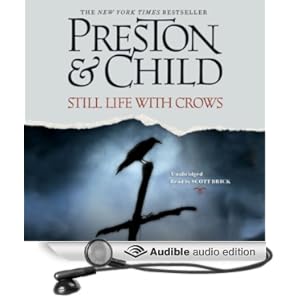
I'm not usually harsh on authors who have topped the Best Seller lists in the past, but I just finished Still Life With Crows by Douglas Preston and Lincoln Child. I'm sorry, let me rephrase that. I just finished CD number 4 of 13 in this audio book narrated by Scott Brick and I plan to return them to the library, unfinished.

I can't even push myself to listen to the rest. My O.C.D. is even saying, "Oh, no girl, I'm not going to make you finish it either."

Was it bad? No, not particularly. The writing is fine and the characters are okay. I didn't have any problems staying in the story, but this was only my 2nd audio book ever and I feel like I'm not giving the narrator a chance. Well, I know I'm not giving him a chance because I'm returning it without having finished the story, right?

Things that annoyed me with the narration and the story:

1. Just because a story takes place in the South or Midwest, doesn't mean you have to narrate in a slow southern drawl, good GAWD!

2. The dialogue coming from FBI Special Agent Pendergast: a southern drawl for a stoic character sounds ridiculous.

3. There were too many non-consequential characters.

4. The cover made it look like a horror story and this blurb makes it sound the same. Correct me if I'm wrong.

A small Kansas town has turned into a killing ground.
Is it a serial killer, a man with the need to destroy?
Or is it a darker force, a curse upon the land?
Amid golden cornfields, FBI Special Agent Pendergast discovers evil in the blood of America's heartland.
No one is safe.

5. I got to chapter 17 and nothing scary happened. Only the discovery of a dead human body and a dead dog. As a matter of fact, I was bored on top of being annoyed with the narration, and I still don't know what genre this is.

Did I mention I got bored?

Anyway, I feel badly for this feedback, but I'm glad I didn't spend the money to purchase the audio book. I would be highly pissed at myself. With my time freed up from that painful mess, I get to begin listening to Fool by Christopher Moore. It sounds promising as the narrator has an English accent. This is the quote that made me check it out:

This is a bawdy tale. Herein you will find gratuitous shagging, murder, spanking, maiming, treason, and heretofore unexplored heights of vulgarity and profanity, as well as non-traditional grammar, split infinitives, and the odd wank.

Sounds like my kind of audio book. We shall see!

Have you ever listened to a book and just couldn't give the narrator a chance to finish? Tell me the title so I don't make another mistake!

Smiley faceIf you enjoyed this article and would like to receive future articles in your inbox --- Subscribe to our free newsletter

31 December 2013

Genre VS Literary Fiction - What's the Difference?

I was asked this question the other day and after thinking about my college years, learning about Ethnic Literature as well as American Literature, I pondered these differences. What I wrote then and what I read now (mostly horror and mystery) are quite different, but not by much. I've read a few debates about genre vs. literary fiction, and I discovered that so many authors get up in arms about their beloved writing, no matter with which group they relate.

Writers love what they produce on the page, like any artist to a canvas. So, it shouldn't be surprising that we defend our artistic pieces. So many critique our styles, our motivations, and our elitist attitudes. That's right, I just called us a bunch of elitists. I state this in a self-deprecating sense though, just to get it out there, in case you're already thinking of me as a literary snob. Yes, I'll admit, I love literary fiction, and I'm happy to share my favorite excerpts.

So, what IS the difference?


Lovers of literary fiction fall deeply with the idea of the work and the internal growth within the characters. They love the experience of reading the work, its beauty and simplicity. The introspection with which the story demands is the most compelling element of literary fiction, aside from its eloquently, flowing cadence.

I cried when I read David Copperfield by Charles Dickens. Why? Because the growth of David, the boy, into David, the man, was a phenomenal read and it touched me. I don't know how else to explain it.

Success, in the eye of the literary author, is experienced by the accumulation of acclaim by other literary types. The motivation is not for monetary gain, but rather the acknowledgement of the beauty within their intellectually stimulating prose.


Lovers of genre fiction enjoy a quick read with twists and plot. They are entertained by conflict and the elements of surprise, which pave the paths of their heros and heroines. Their experience is like a ride in a theme park. The masses love a good mystery or a great horror story. Many even love the romance, paranormal included.


Genre fiction is in high demand and so the number of copies sold and landing on the Best Seller list are indications of success for the genre fiction author, and thus monetary gain being the motivation behind writing. I'm not saying genre authors are not eloquent or compelling, and that they don't love to write, but simply their motivations are different due to a vast audience.

OH EM GHEE, did I just generalize? Yes, I think I did.

Am I adding to the stereotypes of literary snobs and genre rock stars? I hope not. This post was written in order to objectively compare and contrast, briefly, these two fiction types. I couldn't be more broad. Or could I?

Did I leave anything out? Should I have mentioned more about one group or the other?


Smiley faceIf you enjoyed this article and would like to receive future articles in your inbox --- Subscribe to our free newsletter

15 October 2013

Launch of Delusional by Terry Lewis

I've changed up my reading list and added Delusional by Terry Lewis, author of Conflict of Interest and Privileged Information. This will be an exciting read for me. I read the first 3 chapters before it was even publish, but then my hard drive crashed. Oh well, I knew it would be coming out in the future, and here it is, finally.

Delusional is a mystery novel set in my home town, Tallahassee, Florida. The first person prologue introduces Nathan, a mental patient serving time for murder. Now his newly appointed attorney, Ted Stevens, must uncover the truth in the murder of Nathan's psychologist. Find out why by reading this intriguing novel.


I got my signed copy during the novel's launch at Momo's Pizza on September 30th. Other fans and friends of Lewis' first two novels showed up for their copies as well. The party offered a variety of pizzas and appetizers for hungry fans, as well as a cash bar. Guess what I made a beeline for?


Look, it's Liz! Another critique partner of ours.


Thanks for inviting us to the launch. I never tasted pizza from Momo's before. Sad that I've been missing it. In the thirteen years living in Tallahassee, I thought I'd tried every pizza joint within 30 miles.


Enough about food. Go get your copy of Delusional!

29 September 2013

What is Steampunk? - AW Blog Chain

Steampunk and Retro-Futurism are genres that take the aesthetics and technology of the past (the Victorian era, interwar Art Deco era, etc.) and add futuristic technology. Examples include The League of Extraordinary Gentlemen, Atlantis: The Lost Empire, the Downey Sherlock Holmes films, and (or so I'm told) some wacky Japanese animes like Fullmetal Alchemist, Steamboy, and a bunch of the Miyazakis.


When I sat down to write my entry for Absolute Write's September Blog Chain, my mind went blank. I tell myself I can do this, now that I know the definition of Steampunk.

Come with me
And you'll be
In a world of
Pure imagination

No problem, right?

Wrong!

I can't pretend to be a serious writer of this genre if I can't get my mind off silly things like those contraptions created by Dr. Seuss and similar machines used by Willy Wonka in his chocolate factory. Where's my creative flare? I know what people looked like in the Victorian era. I've seen movies, so combining these elements should be fairly easy.

Remember this?


And this?


I also thought the Everlasting Gobstopper machine was pretty cool. It had noisy steam and a honking "in process" mechanism moving things along. Steampunk? I think so. Others may not be so inclined to agree with me. I am the newbie. Someone straighten me out.

Anyone in for a chocolate river ride on this boat?


After all this nonsense of trying to come up with a clever story for you, I decided to do this topic some justice and share with you an educational video. "What is Steampunk?"

If you are an enthusiast of the Steampunk genre, let us know something about your characters and their contraptions. I would love to learn more.

Enjoy the video!


Please visit these other participants and their posts:

pyrosama   [YOU ARE HERE]

04 June 2013

Increase Your Enthusiasm For Writing

There were five of ten shared points I took away from my attendance at the TWA Writers Conference last month. These points have something in common. They keep me enthusiastic about writing; therefore, I'm sharing them with you!

1. Learn something new

Why does this increase your enthusiasm to write? Because, when we learn new things it boosts our confidence and that is something we need as writers in order to allow our creativity to explode onto the screen.

When I was learning Photoshop, I wanted to share my experience, and I did. Likewise, my first digital photos made it into a blog post as well via an embedded sideshow (something else new to me, but I did it and shared it).

2. Make an outline

I never believed this would ever help me, so I never created one, though I kept petering out on every novel I started. I'd get really excited about this story in my head and before I could even pound out a beginning, I'd lost interest. I didn't know where to go when I reached chapter 5. I now have two books with exactly 5 chapters, each sitting in an electronic bookshelf somewhere on my computer. But, now I have an outline, so we'll see if it helps, or if I might just be a lazy procrastinator.


3. Set goals for yourself

Whether it's an hour or 500 words, you must have a daily goal for your writing progress. If not a daily goal, you should at least have a weekly one. I'm one to be the cheerleader for goal setting, right? Here are a few things available to choose from, and I've done them all. The ten minute stream of consciousness is the most fun.


  • Stream of consciousness writing (at least 10 minutes non-stop, even if writing non-sense like, "This is stupid, so so so so stupid I can't think of anything to write, oh and you can't spell check or worry about grammar, just WRITE! Can you tell I'm having fun?")
  • Word count goal (500, 1000, 2500)
  • Chapter per day/week
  • Blog post per week
  • Daily journal entry


4. Understand your audience

Whether you're writing erotica (*cough* gamers of text based RPGs), YA fiction, or horror, you should know your audience. Not everyone is going to love what you write, but if you know your audience, then you know what they love and you can bring it. I'm a Stephen King fan because he's not shy describing gross things like a half naked woman handcuffed to her bed while a stray dog gnaws at her dead husband's scalp as he lays lifeless on the floor because he had a heart attack in the middle of an S&M session with his wife. [deep breath] Moving along.


5. Reach out for support

Nothing will get you more enthusiastic about writing than reaching out to other writers and sharing your struggles. Believe me! I've been struggling for years, but I'd never be as far as I am if I'd not joined the Tallahassee Writers Association or the Florida Writers Association and met some really awesome writers, authors, editors, and publishers. We are all in the business of loving what we do, so why not share?

How do you keep your enthusiasm to write kicking along at maximum speed? Share your ideas.


21 January 2013

Characters Who Won't Leave


Ever had characters stuck in your head who never go away? I do, and I can't get rid of them. I will never write a story about them. They do not belong in anything I am currently working on where I can insert them as secondary characters. So, why won't they leave me alone?

When I hear one speak to me, I will at least give him a name so he will shut up and stop disturbing my thoughts. Another chimes in with her toothy grin and I tell her to go away. She laughs, slapping her knee like I'd made some funny ass comment. I give her a name and ask her to leave. She refuses.

This is my last effort to get these demons to find a home elsewhere. The only way I can get them to shut up and leave me alone is to write about them. I'm giving you short, sweet blurbs to introduce them and all their obnoxious, narcissistic drama.

Cleavis Johnson works at the local marina. He operates the boat-lift  and when boats are not docking after a long day at sea, Cleavis sits on the wooden benches outside the storefront, waiting for the next vessel to approach. He'll smoke his pipe, his fat fingers almost covering the entire bowl. Cleavis is a big man and when he talks, his lips barely touch, probably in order to accommodate his oversized teeth. Even though I have no place for him, he continues to smoke his pipe and talk about all kinds of things which have nothing to do with me or my novel.

Betty Pickerton lost her two front teeth in a bar fight when she was 22 years old. She couldn't afford dental work, but once she turned 30 she didn't care anymore. She had already landed a life-long mate, Johnny Ray. Johnny died in a hunting accident two weeks before they were fixing to get hitched. Now she's 52 years old and guards her 12 x 55 trailer with a sawed off shotgun to keep out the riff raff. When there is a demand for Deliverance, The Reunion, I will consider a spot for you, Betty.

Chesney James dropped out of high school to take care of her alcoholic mother. When she's not decked out in studded, black leather with her hair gelled into five equal spikes, she's holed up in her room cutting on herself. She threatens to take her life if I don't write about her. So, here it is, I'm writing about her. Now, Chesney, I don't write emo stories, so please, please, PLEASE, shut it!

Carrie Chiles works at the Foxy Lady Lounge as a dancer. She won't turn down a good offer when solicited during private sessions in the back. What she does after working hours is her business, literally. She has this notion that if I write about all her sordid deeds, I could make a crap-load of money from all the horny housewives who purchased copies of 50 Shades of Gray. Carrie, I do not write erotica. And even if I did, I don't do sloppy seconds.


Who are some of the characters that disturb your thoughts while you are crafting your novel? Why do you think they are there and what do you think they are looking for?

09 September 2012

Poking Fun of Another Genre


There is nothing I enjoy more than reading about how to accomplish things in a formulaic fashion, like this funny "how to" in writing a bestselling fantasy novel. I'm not writing this post just to share this parody with my writer friends, but to also discuss a very polarizing concept.

Genre nit picking, much like I did in 10 Things I Hate About Romance Novels, isn't as much about picking on the authors as it is about picking on the elements of each genre. Each has its brand, its look and feel. There is a reason for this. They all serve a different purpose and reach different audiences. However, each has the same mission, to feed the hungry minds of readers all around the world.

Keep in mind, and I discovered this recently, each also has their share of hard-core enthusiasts who will fight you tooth and nail if you poke fun of their favorite genre in any form or fashion. So, imagine the flurry of comments on our Facebook group when another writer posted the same link. Some laughed out loud in a textual sort of way; others were indifferent and simply stated it was funny. 

Now you're transported to the shower scene in Psycho and the lurking enthusiast pops out of nowhere and berates everyone for laughing and being mean to their fellow writers of fantasy. Instant dose of Debbie Downer.

I thought about this a little more and I wanted to put this in perspective so people who care about the process of writing and producing literature for readers everywhere can learn HOW to support one another in a much diversified community, the writing community.

The world of literature is composed of elemental groups much like the military; each genre is like a different branch of service. The Navy provides support by sea. The Air Force provides air support, just as you might suspect. The Army puts boots on the ground and the Marine Corps is a fighting force of readiness to be first in combat with all branches at their disposal. But, we never forget, they all have the same mission, protecting our great country.

My husband is a retired Marine; my son is medically retired from the Army. I can't tell you how many Marine and Army jokes fly back and forth between the two. The other day, when we were outside my son's apartment, the UPS man drove up with a delivery and asked my husband, "Are you in the Army?"

"No, that would be my son."

"Oh, I'm sorry." They both laughed.


The UPS guy gave my husband a pen so he could sign for the piece of mail. "I was in the Air Force myself," he offered.

"And you freely admit that?" 

The UPS guy's laughter was genuine.

"I'm a retired Marine." My husband never gives up an opportunity to deliver this tidbit of information when engaged in a discussion with other service members, past and present.

They poked fun of each other a little more until the delivery was made and all necessary documents were signed. I could tell they had a deep respect for one another. One thing they understood, and something which all service members understand, whether they served in one branch or the other, though they all had different uniforms, different obstacles, and very different outlooks on strategy and tactics, they all had a love for their country and strove to protect it together.

That's how we need to understand the cross culture of the different genres. It's not disrespectful to poke fun at the elements of one or the other. It's not elitist to have a favorite. 

There are enough fans to go around. Let's not forget why we each write. The way you support each other is to recognize your differences and understand why genres work the way they do and how each supports the reader base.

Fantasy won't always be popular, nor will romance. Each genre will have its day. In the meantime, let me say this. I support all writers, even those who poke fun with parodies. If it's funny, that author should get props. And, so I say, that was some funny shit!

Do you think parodies are mean spirited? Why or why not?

Contact Diane

Name

Email *

Message *